
Can a Late-Season Split Survive a Northwest Ohio Winter?
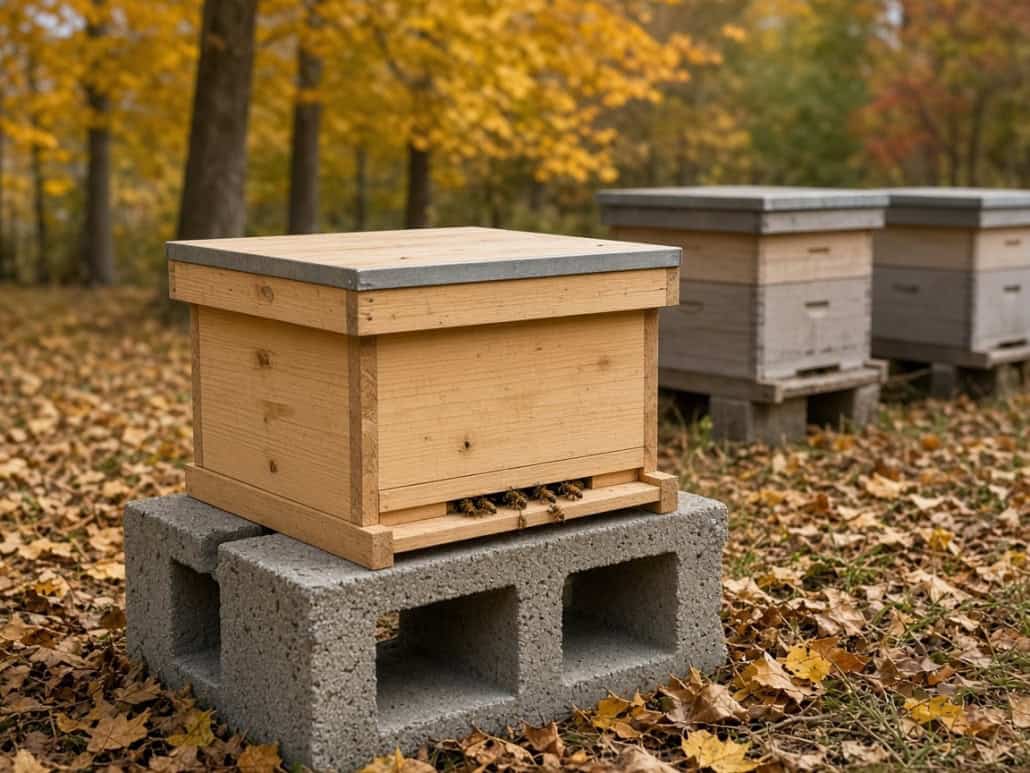
A split made in late summer or fall can turn one strong colony into two. It can also turn one strong colony into one strong colony and one dead one by March. So, can a late season split survive a Northwest Ohio winter? Sometimes, if it goes into the cold with the right things in place.
Why Late Splits Are Risky
A split starts small. In spring, a small colony has months of nectar, pollen and warm weather to grow. In fall, the calendar is working against it. Brood rearing slows as pollen disappears, and the bees that carry a colony through winter are raised in late summer and early fall. Our post on winter bees vs. summer bees explains why that matters. A split that is still building comb and raising its first round of brood in October has very little time.
What a Fall Split Needs
- A laying queen. A split that has to raise its own queen this late often fails. Queens need warm days to mate, and there are fewer drones around in fall. A mated, laying queen at the time of the split is the biggest advantage you can give it.
- Enough bees. A small cluster cannot hold heat as well. I want the split covering several frames before cold weather, not just one or two.
- Stores. Capped honey and pollen frames go in with the split. Cornell recommends that full-size colonies in the Northeast go into winter with about 90 to 100 pounds of honey; a small colony needs less, but it still needs a full box around it (Cornell CALS). See how much honey bees need for winter.
- Low mites. Treat or check before winter. A small colony has no bees to spare.
- The right-sized box. A nuc or a single box that the bees can fill keeps the cluster tight. Too much empty space is cold space.

Feeding a Fall Split
Thick 2:1 syrup in September can help a split fill out, as long as the bees can still cure and cap it. Once the days stay cool, switch to dry sugar or fondant above the cluster. Our guide to fall feeding covers ratios and timing.
Plan B: Combine
If a split is still weak by mid-October, combining it with another colony over a sheet of newspaper is often better than letting it struggle. You keep the bees, and the stronger colony gets more of them for winter. You can split again in spring, when the odds are on your side.
Watch Our Late-Season Split
We filmed a late-season split, queen included: Late season honeybee colony split with a beautiful queen bee! More videos are on our YouTube channel.
More Winter Prep
Once your splits are set, read our fall hive inspection checklist and our guide to winterizing beehives. Questions? Call or text 419-614-6445.


