
Fall Feeding: Syrup Ratios, Timing and When to Stop
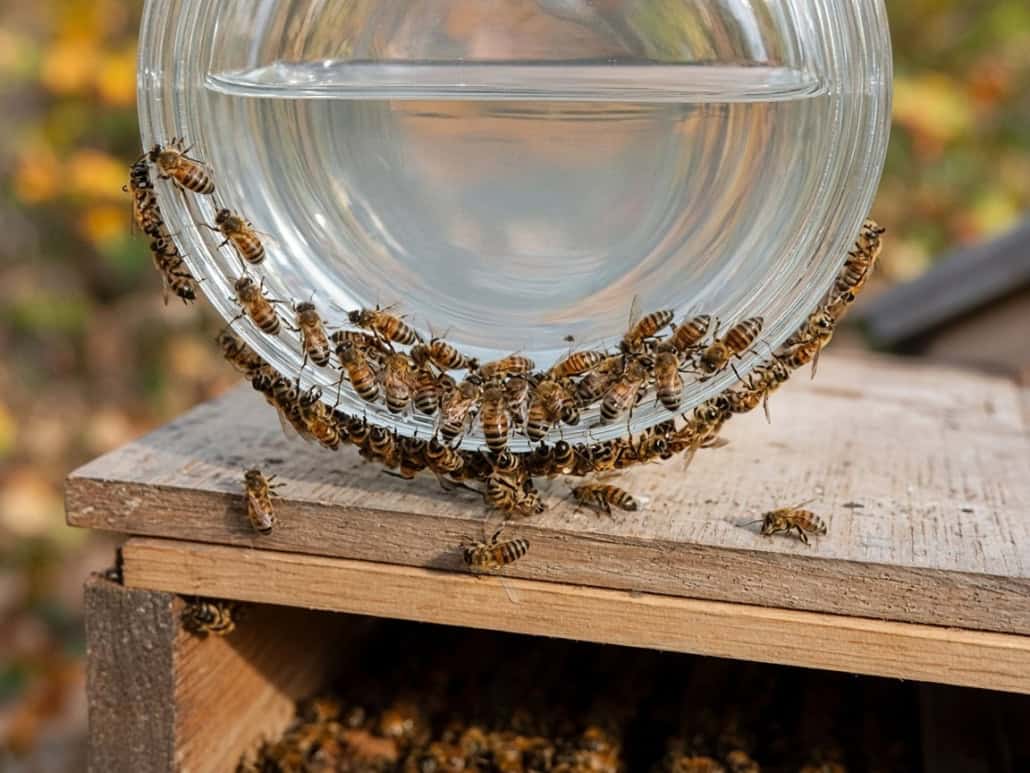
Sometimes a colony comes out of the fall flow light. Maybe goldenrod was short, maybe it is a late split or a rescued colony that started from scratch. That is when fall feeding bees can make the difference. It only works, though, if it is done early enough for the bees to turn syrup into stored food.
Why 2:1 Syrup in Fall
Beekeepers usually talk about two syrup ratios by weight or volume of sugar to water:
- 1:1 (light syrup): mimics a nectar flow and encourages brood rearing and comb building. It is a spring syrup.
- 2:1 (heavy syrup): two parts sugar to one part water. It has less water for the bees to evaporate, so it is stored faster, and it is the standard fall syrup.
Illinois Extension and Oregon State University Extension both recommend heavy syrup for fall feeding (Illinois Extension; OSU Extension). Use plain white table sugar. Brown sugar, raw sugar and molasses contain things bees cannot digest well, and honey from unknown sources can spread disease.

Mixing It
Warm the water, take it off the heat, then stir in the sugar until it is clear. You do not need to boil it. Let it cool before it goes on the hive. I make syrup in small batches so it does not ferment.
Timing in Northwest Ohio
Bees have to take syrup down, evaporate water out of it and cap it. That takes warmth. Oregon State Extension advises stopping liquid feeding once daytime temperatures stay below about 57°F, and other extension guidance uses about 50°F as the cutoff. In our area that usually means heavy feeding is done in September and early October. I check the forecast and stop when the week ahead shows cold days and colder nights.
Syrup that goes on too late sits uncapped in the comb. It adds moisture to the hive and can ferment, and cold bees will not break cluster to reach a feeder. Moisture is a real winter danger, as our guide to winter honey stores and our upcoming post on hive condensation explain.
When It Is Too Cold for Syrup
After the cutoff, switch to dry feed placed directly above the cluster: sugar bricks, fondant, or dry sugar on newspaper over the top bars. The University of Minnesota Bee Lab explains the options.
What to Watch For
- Robbing: syrup smells like a nectar flow to every bee and wasp nearby. Use internal feeders, reduce entrances and never spill syrup in the apiary.
- Weight gain: heft the hive every week. If the weight is not going up, the bees are not storing it.
- Brood box crowding: on a strong flow of syrup, bees can fill the brood nest with stores and leave the queen little room.
Before You Feed
Feeding helps a healthy colony. It will not save a colony with a failing queen or a heavy mite load. Start with our fall hive inspection checklist, then read what honeybees do during an Ohio winter and our winterizing guide.
Questions? Call or text 419-614-6445.


