
HONEYBEES | Winter Clustering Begins in Northwest Ohio Hives
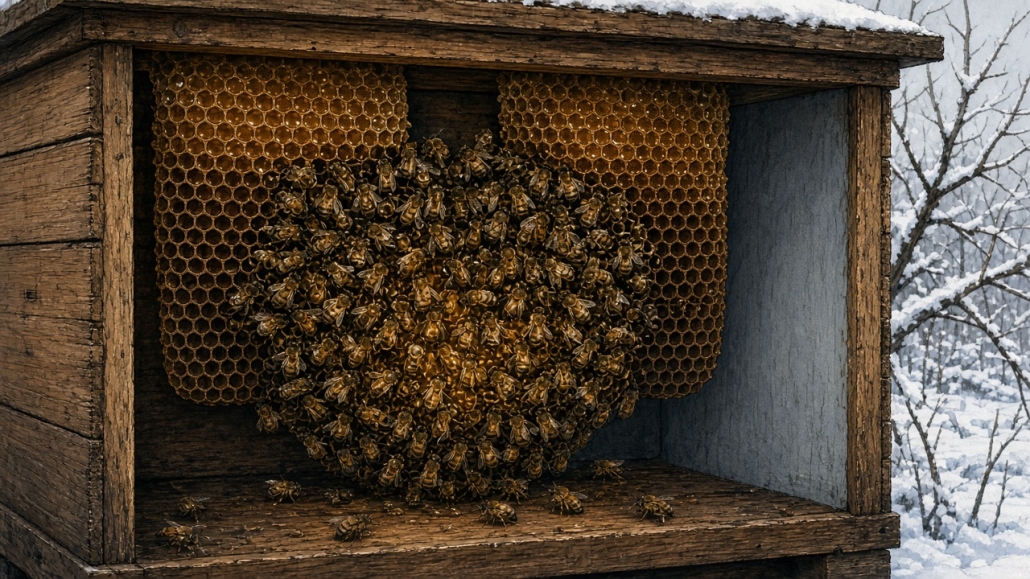
Illustration of honeybees clustering inside a hive during winter.
As autumn temperatures fall across Northwest Ohio, honeybee colonies begin shifting from gathering food to conserving energy. The busy flight paths of summer grow quieter, and more of the colony’s work takes place out of sight.
But a quiet entrance does not mean the bees are sleeping.
Honeybees do not hibernate. They survive winter by gathering into a living cluster, generating warmth and consuming stored food. From Fostoria to the surrounding countryside, winter clustering is an important part of the honeybee colony’s seasonal cycle.
Understanding what happens inside that cluster helps explain why winter beekeeping calls for preparation, careful monitoring and restraint.
When Do Honeybees Begin Winter Clustering?
Honeybees gather more closely as conditions cool. Extension guidance commonly describes tighter clustering beginning around 57°F, although there is no single temperature that acts as an on-off switch for every colony.
Clustering becomes increasingly noticeable as temperatures move through the 50s. Colony size, brood presence, hive conditions and changing weather all influence the response.
During a mild afternoon, bees may spread out across more comb. When temperatures fall overnight, they draw together again. Early winter clustering is therefore a flexible response—not necessarily a permanent formation that begins on a particular date.
For Northwest Ohio hives, the transition between autumn and winter can involve repeated periods of expansion and contraction.
How Does a Honeybee Winter Cluster Stay Warm?
A winter cluster is a coordinated group of worker bees surrounding the queen and, when present, developing brood.
Workers generate heat through activity in their flight muscles without taking flight. This muscular activity is often described as “shivering.” Honey supplies the carbohydrates that fuel the process.
The cluster has a denser outer layer that helps limit heat loss and a warmer interior. As outside temperatures drop, the bees draw closer together, reducing exposed surface area and conserving warmth.
The bees primarily regulate the temperature of the cluster and brood area—not the entire hive. Unoccupied spaces inside a hive can remain much colder.
Their survival depends on keeping living bees warm enough while using finite food reserves.
Does the Cluster Stay at the Same Temperature?
Not throughout winter.
When developing brood is present, workers maintain the brood area at approximately 93–97°F. Eggs, larvae and pupae need a much more closely controlled environment than adult bees alone.
A broodless cluster can operate at lower, more variable temperatures. Its temperature also differs between the warmer center and the cooler outer layer.
This means that saying “bees keep their hive at 95°F all winter” oversimplifies what actually happens. Temperature regulation changes with brood presence, colony condition and environmental conditions.
Brood rearing also increases the colony’s energy demands, making accessible food especially important as winter progresses.
What Happens to the Queen During Winter?
The queen remains within the cluster, where workers feed and care for her.
As autumn forage declines, egg laying generally slows and may pause. However, not every colony becomes completely broodless, and the timing varies with weather, genetics, nutrition and colony condition.
Brood production may resume during winter, before people notice obvious signs of spring outdoors. A warm spell does not guarantee substantial brood rearing, and cold weather does not prove that a colony has no brood.
Winter Bees Carry the Colony Toward Spring
The workers that help a colony through winter are physiologically different from typical summer foragers.
Often called winter bees, these workers have substantial nutrient reserves associated with their fat-body tissue. Despite the name, this tissue does much more than store fat: it supports metabolism, immunity and other essential functions.
Winter workers can live for several months, helping maintain the cluster and later care for developing bees.
Their health matters long before the first snowfall. Nutrition, colony strength and effective Varroa mite management during the preceding seasons influence whether enough healthy workers enter winter.
Clustering is an impressive adaptation, but it cannot guarantee survival or compensate for every underlying problem.
Why Stored Honey Must Be Within Reach
Honey is winter fuel, but having honey somewhere in the hive is not always enough.
As bees consume nearby stores, the cluster gradually shifts toward additional food. Prolonged cold can restrict that movement. A colony may become separated from usable honey and starve even when food remains elsewhere on the comb.
That is why winter preparation involves both adequate reserves and their accessibility—not simply whether a hive contains honey.
Food demands also change. Renewed brood rearing increases consumption, and a colony that appeared well supplied earlier can become vulnerable later.
For beekeepers, monitoring food reserves remains important through winter and into spring. Suspected shortages call for a weather-appropriate assessment and experienced guidance rather than an improvised cold-weather feeding experiment.
Moisture Matters Alongside Temperature
Honeybees release water vapor as they metabolize food. Inside a cold hive, that moisture can condense on cooler surfaces.
Condensation that drips onto the cluster can create a serious chilling risk. Rain intrusion and damp equipment can add further problems.
Winter moisture management involves balancing insulation, weather protection and appropriate airflow for the hive’s design and location. Simply adding more ventilation is not always the answer: excessive drafts can increase heat loss.
The goal is to limit harmful wetting without unnecessarily exposing the colony to cold moving air. There is no single configuration that suits every hive and every site.
Why Bees Sometimes Fly on Winter Days
A mild, sunny winter afternoon may bring brief activity at the entrance.
Honeybees may take cleansing flights, leaving the hive to release accumulated waste before returning. Whether they fly depends on temperature, sunshine, wind and the colony—not a calendar date alone.
A short burst of activity does not mean winter is over. Likewise, a quiet entrance during cold weather does not, by itself, establish that a colony has died.
Watching from a respectful distance is usually more useful than disturbing the hive to provoke a response.
Supporting Honeybees Through Northwest Ohio Winter
Winter care is often about doing less inside the hive while paying attention outside it.
Beekeepers can monitor weather damage, cover security, entrance obstruction and food reserves using methods suited to the conditions. Routine frame-by-frame inspections during cold weather can disrupt the cluster and expose bees or brood to chilling.
For everyone else, the most helpful approach is simple: leave occupied hives undisturbed and give bees space during occasional flights.
Winter clustering reveals how closely honeybee survival depends on cooperation, healthy workers and stored resources. The apiary may look still, but inside the cluster, the work continues.
Explore The Mindful Beekeeper to learn more about local honeybees, or get in touch with a honeybee question.
Sources
- Mid-Atlantic Apiculture Research and Extension Consortium: Seasonal Cycles of Activities in Colonies
- American Bee Journal: Thermoregulation in Honey Bees, Part 2
- Iowa State University Extension: Overwintering Basics
- Journal of Experimental Biology: Overwintering Physiology in Honey Bees
- Utah State University Extension: Annual Beekeeping Calendar


