
Pure White vs. Light Amber: Honey Color Grades Explained
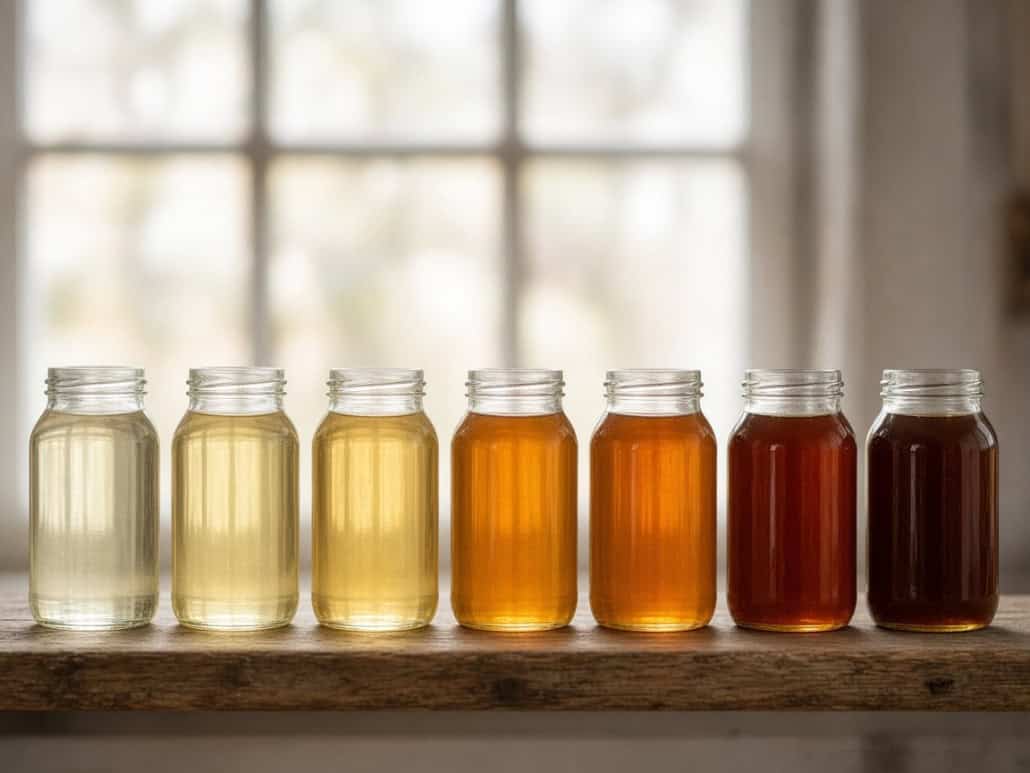
Line up a dozen jars of honey and you will see everything from nearly clear to the color of strong coffee. Those differences are official. The USDA sorts honey into seven honey color grades, from water white to dark amber. Here is how the scale works, what it does and does not tell you, and what the “Pure White” and “Light Amber” names on our Apiary #1 jars mean.
The Seven USDA Color Classes
The U.S. standards for extracted honey describe color using a scale measured in millimeters on a Pfund color grader (USDA AMS):
- Water White: 8 mm or less
- Extra White: over 8 to 17 mm
- White: over 17 to 34 mm
- Extra Light Amber: over 34 to 50 mm
- Light Amber: over 50 to 85 mm
- Amber: over 85 to 114 mm
- Dark Amber: over 114 mm
The higher the number, the darker the honey. The National Honey Board lists the same seven categories in its honey reference guide (National Honey Board).

Color Is Not Quality
This surprises a lot of people. The USDA standard states plainly that the color of extracted honey is not a factor of quality for the purpose of its grades. U.S. Grade A, B and C are scored on other things, such as water content, flavor and aroma, clarity and absence of defects. A dark honey can be Grade A, and a pale honey can be Grade C.
What Color Does Tell You
- Floral source: clover and many early summer flowers tend to give light honey. Fall flowers such as goldenrod and asters, and plants like buckwheat, tend to give darker honey. Our post on goldenrod and aster honey covers fall honey.
- Flavor, in general: lighter honeys are usually milder; darker honeys are usually stronger and more robust. It is a tendency, not a rule.
- Age and storage: honey darkens slowly over time and faster when it is heated or stored warm.
Our Pure White and Light Amber Honeys
Our shop lists two Apiary #1 honeys by color: Pure White Honey and Light Amber Honey (Small Batch). Both come from rescued honeybee colonies at our apiary in Loudon Township. The names tell you which end of the color range to expect: Pure White is the pale, mild end, and Light Amber is a deeper gold. Different flowers were blooming when each batch was made, and the color reflects that.
Because our honey comes from the flowers around one apiary rather than a blend from many places, color can vary from batch to batch. That variation is part of what local honey is.
Taste Them Side by Side
The best way to learn honey color is to taste two side by side. You will notice the lighter honey is softer and the darker one has more depth. Browse the honey section of our shop, and call or text 419-614-6445 with questions.


