
• Link to Facebook
  • Link to Youtube
  • Link to Dribbble
TMB Honey Price 2025

Sustainability From Rescue to Harvest | 419-614-6445

  • Shopping Cart Shopping Cart
    0Shopping Cart
The Mindful Beekeeper
  • Home
  • Wasp & Bee Removal
    • Yellowjacket Nest Extraction
    • Northwest Ohio
    • Defiance, Ohio
    • Findlay, Ohio
    • Fostoria, Ohio
    • Fremont, Ohio
    • Marion, Ohio
    • Mansfield, Ohio
    • Napoleon, Ohio
    • Oregon, Ohio
    • Tiffin, Ohio
    • Toledo, Ohio
    • Port Clinton, Ohio
  • Wall & Ceiling Cuts
    • Honeybee Wall Cuts (Schedule For 2027)
  • Services
    • Honeybee Swarm Rescue
      • Fulton County, OH
      • Lucas County, OH
      • Hancock County, OH
      • Henry County, OH
      • Ottawa County, OH
      • Sandusky County, OH
      • Seneca County, OH
      • Wood County, OH
      • Wyandot County, OH
    • Specialty Services
      • Bees in Wall Removal
      • Bees in Chimney Removal
      • Thermal Camera Scans
      • Swarm Removal
  • About
    • Apiary #2 – Van Buren, OH Local Honey
    • Beehive Sponsorship Program
    • Beekeeper Blog
      • More on the Honeybee Vaccine From Dalan Animal Health
      • The Year the Hives Went Silent: Inside 2025’s Massive Honey Bee Die‑Off
      • When a Beekeeper Gifts You a Jar of Honey
    • Projects
      • 2025 Honeybee Rescues
      • 2026 Honeybee Rescues
    • Gallery
      • Farm Flowers
      • Video Library
    • 2026 Beehive Sponsors
      • 2026 Beehive Sponsor: Fort Findlay Coffee & Doughnut Shoppe
      • 2026 Beehive Sponsor: Sisters in Shelter
  • Shop
    • Raw Local Honey (Seneca County, OH)
    • TOLENTO™ Coffee Infused Honey
    • TOLENTO™ Coffee Roasters
    • Raw Local Bee Pollen
    • Fast Growing Trees & Shrubs
  • Contact
  • Menu Menu
Honey Benefits

Goldenrod and Aster Honey: Why Fall Honey Smells and Tastes Different
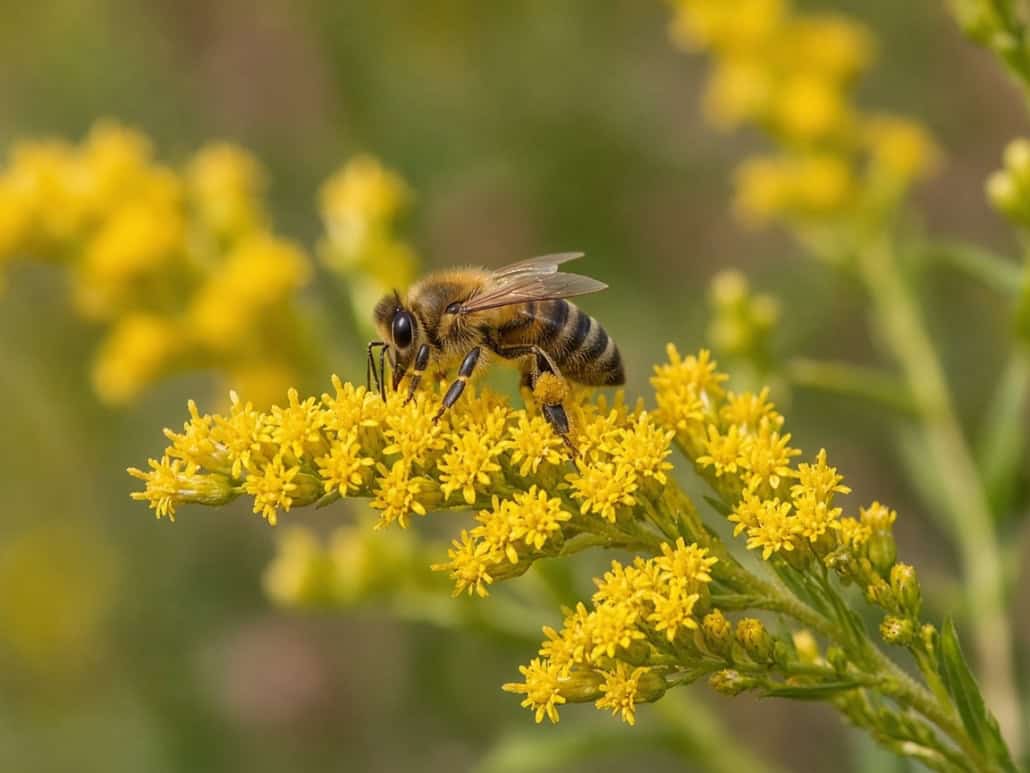
A honeybee gathering nectar on bright yellow goldenrod flowers in a late-summer field

Walk past a beehive in September and you might catch a smell like old gym socks or sour milk. New beekeepers sometimes panic and think something is wrong. Usually it is the goldenrod flow. Goldenrod honey and aster honey are the last big harvests the bees bring in each year, and they are quite different from the pale honey of early summer.

Where Fall Honey Comes From

In Northwest Ohio, the clover and early summer flowers fade by August. Then roadsides, fence rows and field edges turn yellow with goldenrod, followed by white and purple asters. Both are important late-season sources of nectar and pollen for honeybees, bumblebees and many native bees. Extension specialists describe goldenrod as a valuable late food source, though in many years its flow alone is not enough to fill a colony for winter (Ask Extension).

That Smell

The odor comes from goldenrod nectar as the bees cure it into honey. As the nectar ripens and the bees fan off moisture, the smell drifts out of the hive. Once the honey is capped, it fades. A sour smell during a goldenrod flow is normal. If the smell is rotten and the brood looks sunken, discolored or perforated, that is a different matter and worth a closer look or a call to your county apiary inspector.

A honeybee on a small purple aster flower with a yellow center in autumn
Asters bloom alongside goldenrod and keep bees foraging into October.

Color, Flavor and Texture

  • Color: goldenrod honey is usually a deeper gold to amber than summer clover honey. Our post on honey color grades explains how color is measured.
  • Flavor: stronger, often described as spicy or buttery, with a slightly bitter finish when asters are mixed in. The smell in the hive is not the taste in the jar.
  • Texture: goldenrod and aster honeys tend to crystallize quickly, sometimes within weeks. That is natural and does not mean the honey has gone bad. See why honey crystallizes.

Why Most of It Stays With the Bees

Fall honey is winter food. In our apiary, the bees come first: we only harvest from strong hives that have more than they need for winter. In practice, that means most of the goldenrod and aster honey stays in the hive, packed above the brood nest where the cluster will eat its way up through it in January and February. Pulling fall honey and then feeding sugar syrup to replace it is a trade most colonies do not need.

Help the Fall Flow Where You Live

If you have a field edge, ditch or back corner, leaving goldenrod and asters standing through October is one of the best things you can do for pollinators. Goldenrod is often blamed for fall allergies, but its pollen is heavy and sticky and moves on insects rather than the wind.

Find Our Honey

Our honey comes from rescued honeybee colonies at Apiary #1 in Loudon Township. You can see what is available in the honey section of our shop, and read about the benefits of honey for people and animals.

Questions about bees or honey? Call or text 419-614-6445.

Sources

  • Ask Extension: When does the fall honey flow happen?
  • Betterbee: Waiting for Goldenrod
October 30, 2026/by The Mindful Beekeeper
Share this entry
  • Share on Facebook
  • Share on X
  • Share on Pinterest
  • Share on LinkedIn
  • Share on Tumblr
  • Share on Vk
  • Share on Reddit
  • Share by Mail
https://themindfulbeekeeper.com/wp-content/uploads/2026/10/honeybee-on-goldenrod-flowers.jpg 864 1152 The Mindful Beekeeper https://themindfulbeekeeper.com/wp-content/uploads/2026/08/Screenshot-2026-08-28-at-1.27.08-AM.png The Mindful Beekeeper2026-10-30 13:00:002026-10-30 13:00:00Goldenrod and Aster Honey: Why Fall Honey Smells and Tastes Different

[instagram-feed feed=1]

Quick Connect

Blank Form (#5)

Call or Text Instead
419-614-6445

Office Location/Apiary #1

12860 W TR 114,
Loudon Township,
Seneca County, OH 44830

Farm/Apiary Hours:

By Appointment Only

Archives

  • November 2026
  • October 2026
  • September 2026
  • August 2026
  • April 2026
  • February 2026
  • January 2026
  • December 2025
  • November 2025
  • October 2025
  • August 2025
  • July 2025
  • May 2025

Categories

  • 2026 Beehive Sponsor
  • 2026 Honeybee Rescues
  • Alchemy Bee
  • Bee Pollen
  • Bee Removal
  • Beehive Sponsors
  • Beehives
  • Beekeeping
  • Beekeeping With Fibromyalgia
  • Defiance
  • Fostoria
  • Honey Benefits
  • Honey Infusions
  • Honeybee Removal & Relocation
  • Honeybee Rescue
  • Infused Honey
  • Knowledge Base
  • Maple Syrup
  • Mindful Beekeeping
  • Mindfulness
  • Northwest Ohio
  • Northwest Ohio Bee Removal
  • Ohio
  • Opossums
  • Pesticide Free Pest Control
  • Seneca County Ohio Bee Removal
  • Tolento™ Coffee Infused Honey
  • Uncategorized
  • Van Buren
  • Wasp Control
  • Wildlife
  • Winter Beekeeping
  • Yellow Jacket Control
  • YouTube Channel

Scheduling Availability

Monday: 12PM – 7PM
Tuesday: 12PM – 7PM
Wednesday: 12PM – 7PM
Thursday: 12PM – 7PM
Friday: 12PM – 7PM
Saturday: 12PM – 7PM
Sunday: 12PM – 7PM


Got Honeybees? Get on the list early and schedule a removal today. 

Tags

#WaspRemoval #WaspSeason #WaspControl #WaspHiveRemoval #BeeKeeping #BeeKeeper #HoneyBeeRescue #HoneyBeeRemoval

© Copyright - The Mindful BeeKeeper LLC. Website Designed by Tolento Media Group
  • Link to Facebook
  • Link to Youtube
  • Link to Dribbble
Link to: The Last Hive Check of Fall: What I Look for Before Closing Up for Winter Link to: The Last Hive Check of Fall: What I Look for Before Closing Up for Winter The Last Hive Check of Fall: What I Look for Before Closing Up for WinterA beekeeper in a veil lifts a frame of capped honey from a hive surrounded by autumn leaves Link to: How Much Honey Does a Colony Need to Get Through an Ohio Winter? Link to: How Much Honey Does a Colony Need to Get Through an Ohio Winter? A beekeeper in a veil and gloves grips the bottom of a two-box wooden beehive on a stand to judge its weight in an autumn apiaryHow Much Honey Does a Colony Need to Get Through an Ohio Winter?
Scroll to top Scroll to top Scroll to top