
HONEYBEES | Fact-Checking the Killer Bee Guy: Africanized Bees, Bee Pollen and Scientific Evidence
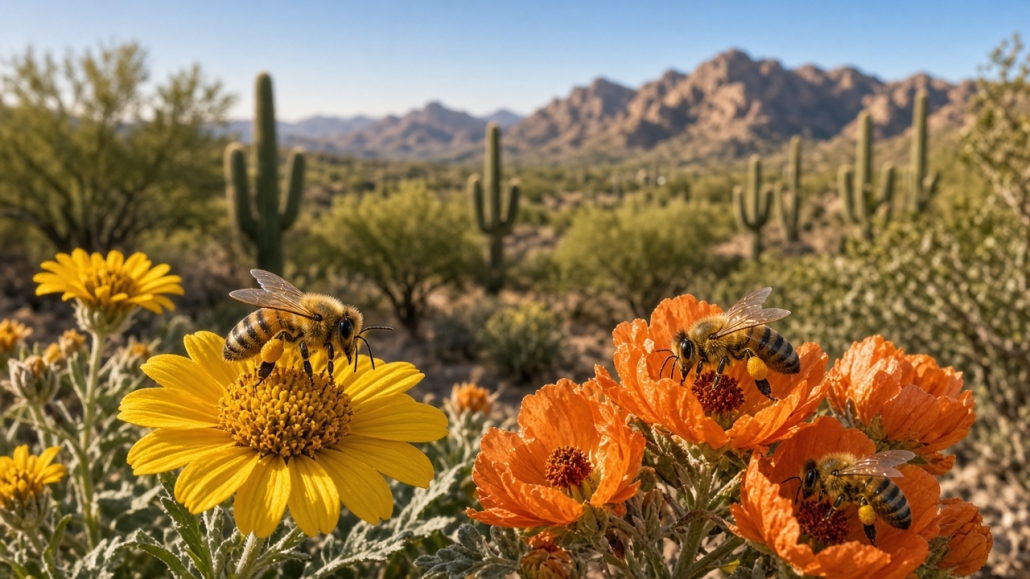
Dramatic warnings about “killer bees” attract attention. But good honeybee education requires more than a memorable name. It requires explaining when bees pose a danger, what research supports and where marketing claims go beyond the evidence.
Reed Booth operates as “The Killer Bee Guy” in Bisbee, Arizona. We reviewed statements on his website on November 7, 2026, and compared them with university extension guidance and published medical research.
The findings are mixed: warnings about defensive Africanized honeybee colonies have scientific support, but need context. A claim that bee pollen is “Great for allergies” is not supported by reliable clinical evidence.
Are “Killer Bees” Dangerous?
The Killer Bee Guy’s bee-removal page states:
“If you have bees on your property in Southeastern Arizona, you need to get rid of them ASAP! Killer Bees are DANGEROUS!”
There is a legitimate safety concern behind that warning. Africanized honeybees can defend their colonies in greater numbers and pursue a perceived threat farther than typical managed European honeybees.
The University of Arizona Cooperative Extension explains that Arizona’s wild honeybees are considered Africanized to some extent. It warns that disturbing colonies can lead to serious injury or death and advises against attempting removal yourself.
However, a defensive nest, a temporary swarm and a bee visiting a flower are different situations. Treating every encounter as equally dangerous leaves out important information.
NC State Extension explains that individual Africanized bees foraging on flowers are no more dangerous than European honeybees. University of Arizona guidance also notes that swarming bees are generally not defensive.
That does not make approaching or handling an unknown swarm advisable. It means that accurate education should distinguish colony defense from ordinary foraging and swarming behavior.
Africanized Honeybee Venom Is Not Unusually Powerful
A common misconception is that Africanized honeybees possess exceptionally potent venom. We did not find that claim on the website reviewed, but it is important context for understanding the “killer bee” nickname.
A study published in the American Journal of Tropical Medicine and Hygiene found similar lethal doses for Africanized and European honeybee venom in mice. Its authors attributed the greater danger to multiple stinging rather than increased venom potency.
NC State Extension likewise describes their stings and venom as nearly identical.
The important difference is the colony’s defensive response: more bees may participate, creating the possibility of many stings. Any honeybee sting can also cause a medical emergency in someone with a severe allergy.
Does Bee Pollen Help Allergies?
The Killer Bee Guy homepage promotes bee pollen with the statement:
“Great for allergies.”
This is the clearest unsupported health claim identified in our review.
The idea that eating bee pollen reliably desensitizes a person to seasonal allergies is not established by good clinical evidence. A Cleveland Clinic review explains that evidence is insufficient to support bee pollen as an allergy treatment and that attempts at allergen desensitization belong under an allergist’s supervision.
There is also a safety concern. Published reports document severe allergic reactions after people consume bee pollen, including anaphylaxis from a bee pollen supplement. A separate case report and literature review highlights the potential for serious reactions, particularly among people with pollen allergies.
Bee pollen should not be promoted as a proven treatment for seasonal allergies. People considering it for a health condition should discuss the evidence and potential risks with a qualified clinician.
This claim is not unique to one seller. Its prevalence across the bee-product industry does not make it scientifically sound. Equally, an unsupported statement alone does not establish that its author knowingly intended to deceive customers.
What Can Be Established About Honey Sourcing?
Questions about honey origin deserve evidence, not assumptions.
The honey product page reviewed did not identify a floral source or country of origin in its visible product description. That observation concerns the webpage—not the labeling on a physical jar and not proof of misrepresentation.
Public web searches for this review did not locate a regulator finding, court judgment or traceable laboratory result establishing honey fraud by this business. Those searches were not an exhaustive investigation of every regulatory or court record.
It would therefore be unjustified to describe fraud as proven.
Importing or reselling honey is not inherently fraudulent. Relevant questions include whether origin statements are accurate, whether required labeling is present and whether a product sold as pure honey contains undeclared ingredients. Those questions require records, actual labels and appropriately documented testing.
Why Evidence Matters in Beekeeping
A science-based critique should apply the same standard to everyone: quote the actual statement, preserve its context and compare it with credible evidence.
Our review supports three conclusions:
- Africanized honeybee colonies can pose serious risks, but foraging bees, swarms and established nests should not be described as identical threats.
- Bee pollen is not an established allergy treatment and can itself trigger serious allergic reactions.
- The material reviewed does not establish intentional deception or honey fraud.
For Northwest Ohio readers, the broader lesson is to be cautious with sensational bee claims and unsupported health promises. Arizona-specific guidance should not automatically be applied to an Ohio colony.
Accurate honeybee education can acknowledge real risks without exaggerating them—and question marketing without replacing evidence with accusations.
Have a honeybee question? Contact The Mindful Beekeeper.


