
Winter Bees vs. Summer Bees: Why Fall-Born Workers Live for Months
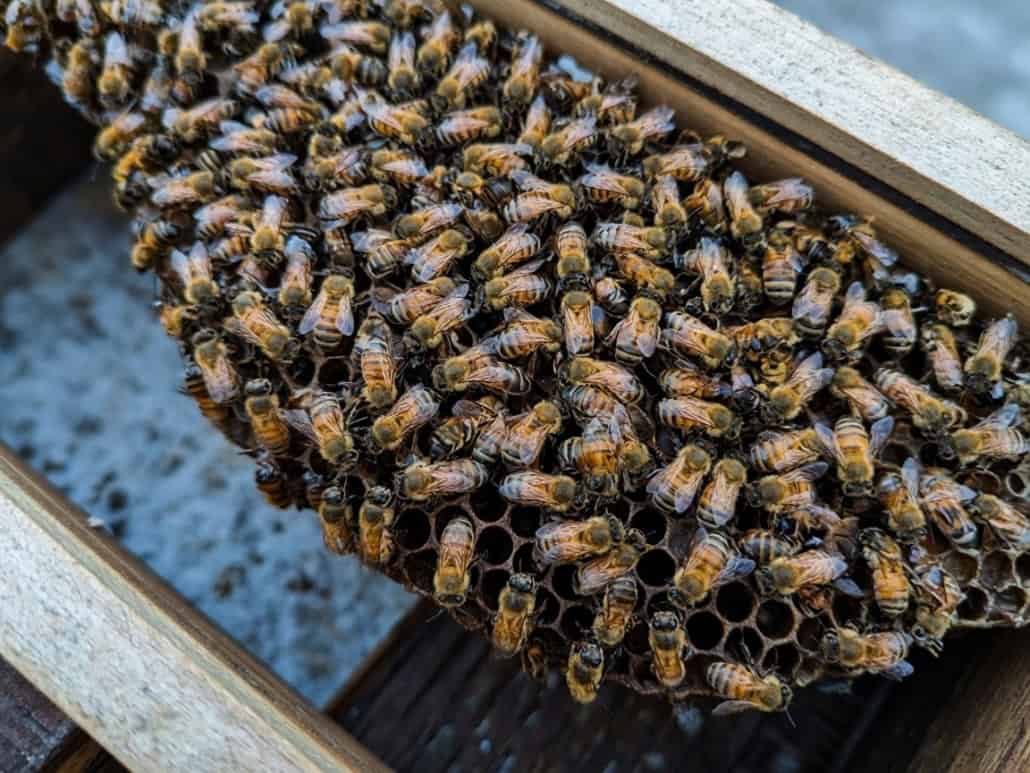
A worker honeybee born in June lives about a month. A worker born in October can live until spring. Same colony, same queen, very different bee. These long-lived winter bees are one of the most interesting pieces of honeybee biology, and they explain why late summer matters so much to winter survival.
Two Kinds of Workers
Researchers sometimes call the long-lived fall workers “diutinus” bees, from the Latin for long-lasting. They are not a separate caste. They are ordinary workers that develop differently because of the conditions they are raised in. One research team summarized it this way: when brood rearing is active, workers survive for 3 to 6 weeks; when brood rearing declines, worker lifespan can be 20 weeks or longer (study abstract on PubMed).
What Makes a Winter Bee Different
- Bigger fat bodies. Winter bees store more fat and protein in their abdomens.
- More vitellogenin. This storage protein is tied to immunity, nutrition and lifespan. In summer, nurse bees use it up making brood food. When there is little brood to feed, it builds up. A controlled experiment found that reducing brood rearing raised vitellogenin levels and delayed both foraging and death (full study on PMC).
- Well-developed brood-food glands. Winter bees can raise the first rounds of brood in late winter, before fresh pollen is available.
- Less flying. Foraging wears bees out. Winter bees mostly stay home.

What Triggers the Switch
Dwindling pollen appears to be a major cue. In a study in Ecological Entomology, Mattila and Otis artificially extended or cut short the fall pollen supply. Colonies with more pollen kept raising brood later, but long-lived winter bees did not appear until brood rearing declined (Mattila & Otis, 2007). More recent work suggests that season itself, not only the amount of brood, shapes nurse bee physiology. The full picture is still being studied.
Why August and September Decide Winter
The bees that will carry a colony to spring are raised in late summer and early fall. If those bees develop while the colony has a heavy varroa load, or while forage is poor, the winter population starts out weak. That is why many beekeepers treat for mites in late summer rather than waiting for a low count in November. By then, the winter bees have already been raised. Our post on oxalic acid treatments covers winter timing.
What Winter Bees Do All Winter
They form the cluster, shiver their flight muscles to make heat, rotate between the warm core and the cooler outer shell and slowly eat their way through stored honey. Read more in The Winter Cluster: How Honeybees Defy Physics and what honeybees do during an Ohio winter. For stores, see how much honey bees need for winter.
Questions about your bees? Call or text 419-614-6445.
Sources
- Brood pheromone suppresses physiology of extreme longevity in honeybees (PubMed)
- The nurse’s load: early-life exposure to brood-rearing affects behavior and lifespan in honey bees (PMC)
- Mattila & Otis: Dwindling pollen resources trigger the transition to broodless populations of long-lived honeybees each autumn


