
Goldenrod and Aster Honey: Why Fall Honey Smells and Tastes Different
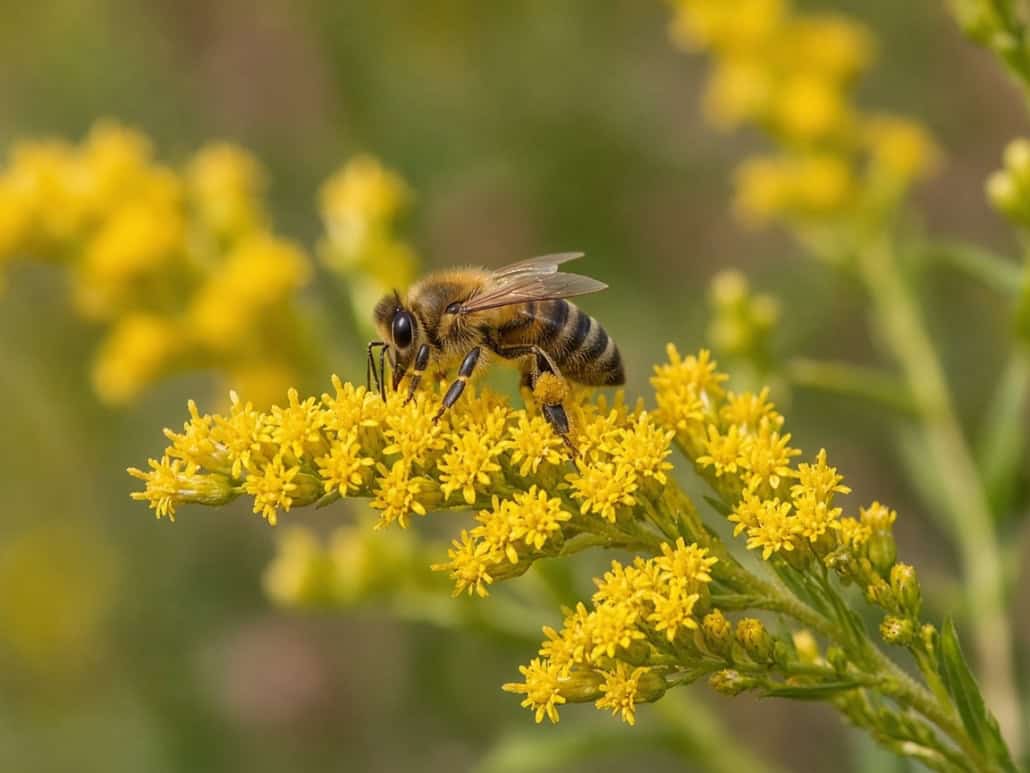
Walk past a beehive in September and you might catch a smell like old gym socks or sour milk. New beekeepers sometimes panic and think something is wrong. Usually it is the goldenrod flow. Goldenrod honey and aster honey are the last big harvests the bees bring in each year, and they are quite different from the pale honey of early summer.
Where Fall Honey Comes From
In Northwest Ohio, the clover and early summer flowers fade by August. Then roadsides, fence rows and field edges turn yellow with goldenrod, followed by white and purple asters. Both are important late-season sources of nectar and pollen for honeybees, bumblebees and many native bees. Extension specialists describe goldenrod as a valuable late food source, though in many years its flow alone is not enough to fill a colony for winter (Ask Extension).
That Smell
The odor comes from goldenrod nectar as the bees cure it into honey. As the nectar ripens and the bees fan off moisture, the smell drifts out of the hive. Once the honey is capped, it fades. A sour smell during a goldenrod flow is normal. If the smell is rotten and the brood looks sunken, discolored or perforated, that is a different matter and worth a closer look or a call to your county apiary inspector.

Color, Flavor and Texture
- Color: goldenrod honey is usually a deeper gold to amber than summer clover honey. Our post on honey color grades explains how color is measured.
- Flavor: stronger, often described as spicy or buttery, with a slightly bitter finish when asters are mixed in. The smell in the hive is not the taste in the jar.
- Texture: goldenrod and aster honeys tend to crystallize quickly, sometimes within weeks. That is natural and does not mean the honey has gone bad. See why honey crystallizes.
Why Most of It Stays With the Bees
Fall honey is winter food. In our apiary, the bees come first: we only harvest from strong hives that have more than they need for winter. In practice, that means most of the goldenrod and aster honey stays in the hive, packed above the brood nest where the cluster will eat its way up through it in January and February. Pulling fall honey and then feeding sugar syrup to replace it is a trade most colonies do not need.
Help the Fall Flow Where You Live
If you have a field edge, ditch or back corner, leaving goldenrod and asters standing through October is one of the best things you can do for pollinators. Goldenrod is often blamed for fall allergies, but its pollen is heavy and sticky and moves on insects rather than the wind.
Find Our Honey
Our honey comes from rescued honeybee colonies at Apiary #1 in Loudon Township. You can see what is available in the honey section of our shop, and read about the benefits of honey for people and animals.
Questions about bees or honey? Call or text 419-614-6445.


