
The Last Hive Check of Fall: What I Look for Before Closing Up for Winter
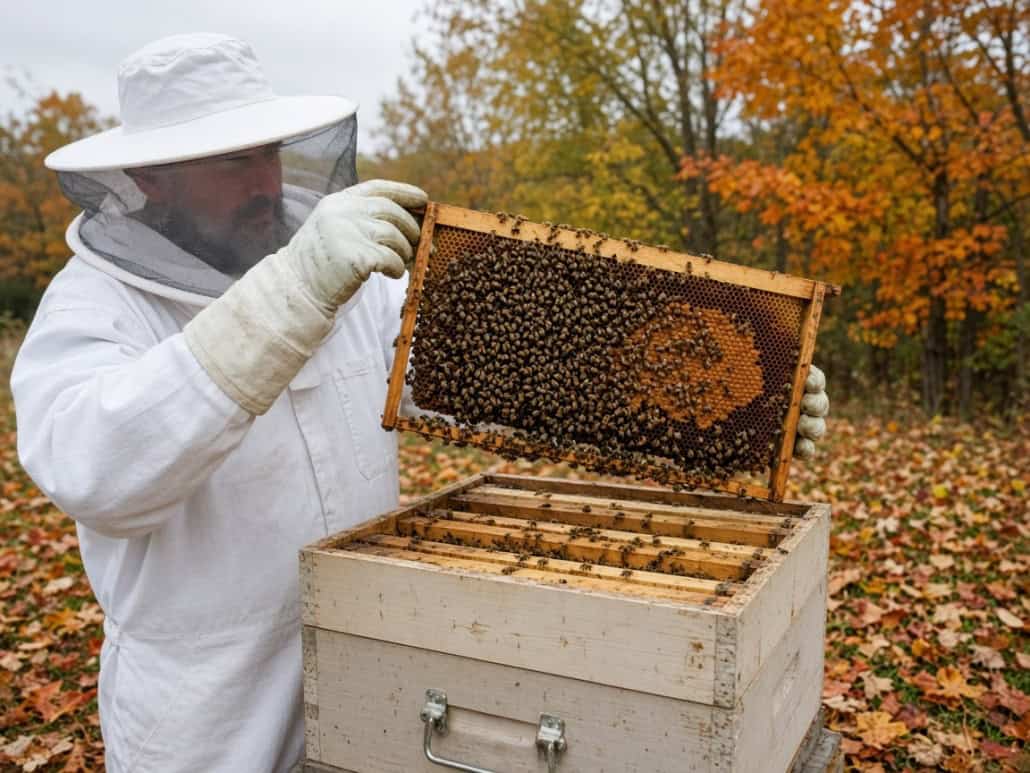
Every fall there is one last day when I open each hive, pull a few frames and make my final calls for the year. After that, the lids stay on until spring. A good fall hive inspection is short, but it decides a lot about which colonies make it to April in Northwest Ohio. Here is what I check, in the order I check it.
Pick the Right Day
The last inspection should happen on a calm, sunny afternoon while it is still mild enough for bees to fly. Once the cluster forms for the season, pulling frames breaks it apart and lets heat out. Cornell’s pollinator program notes that colonies need to be fully prepared for winter in fall, because there is little a beekeeper can fix once cold weather sets in (Cornell CALS, Overwintering). I work quickly, keep the smoker light and close each hive within a few minutes.
1. Queen Status
I am not always looking for the queen herself. I am looking for evidence that she is there and laying. In late fall the brood nest shrinks a lot, so a small patch of capped brood or a few eggs is enough. A colony with no brood at all and no queen this late will not raise a new one in time, and it usually goes into winter as a slowly shrinking group of old bees. Spotty brood this late is normal; no brood plus agitated, roaring bees is the warning sign.
2. Honey Stores
Starvation ends more colonies than cold does. I look for capped honey arched over and beside the cluster and I heft the back of the hive to judge weight. Cornell recommends that a full-size colony in the Northeast go into winter with roughly 90 to 100 pounds of honey. Our post on how much honey bees need for winter goes deeper on hefting and counting frames.
This is also why our rule at the apiary is simple: our honeybees take priority over selling honey, and we only take honey from strong hives that have more than they need for winter.

3. A Last Mite Count
Varroa mites are the biggest single threat to a colony’s winter survival. A sugar roll or alcohol wash on about half a cup of bees from the brood area gives a quick count. If the count is high, the window for treatment is still open, and late fall into early winter is when many colonies in our area are nearly broodless, which is when oxalic acid works best. We cover timing and methods in oxalic acid treatments for varroa mites. Always follow the product label.
4. Cluster Size and Position
A strong colony going into winter covers several frames, and I like to see the bees sitting in the lower box with honey above them. Bees move up through their stores during winter, so honey above the cluster matters more than honey off to the side.
5. Entrance and Equipment
- Entrance: reduced or guarded before mice move in. See our guide to mouse guards and entrance reducers.
- Boxes and lids: no cracks, gaps or warped covers that let rain and wind in.
- Tilt: a slight forward tilt so condensation and rain drain out the front.
- Wind: a wind break on the north and west sides helps a lot on open farmland.
Wrapping and insulation come after this inspection, not during it. Our guide to winterizing beehives covers that step.
What I Do With the Results
Every colony gets one of three labels in my notes: ready, needs help (feed, treat or combine), or not going to make it. Weak colonies with a good queen can sometimes be combined with a stronger one over newspaper so the bees are not lost. Being honest about a weak hive in October is better than finding a dead one in March.
Watch the Inspection
We filmed one of these pre-winter checks in Ohio. You can watch it here: Beehive inspection complete prior to winter in Ohio, and find more on our YouTube channel.
Honeybees in a Wall or Building?
Fall is when a lot of homeowners notice a colony that has been living in a wall all summer. Honeybee colonies do not die off in winter the way wasp nests do. In-wall honeybee removals are being scheduled for Spring 2027. Call or text 419-614-6445, or see our sister company’s humane honeybee removal and relocation page.

